

I always tell my children that I can teach them how to work for my law firm, which only handles car accidents, in less than six weeks. Of course, I may be oversimplifying it, as I have been practicing car accident law for over 30 years now. As a result, I asked ChatGPT to summarize the Kentucky Motor Vehicle Reparations Act for me in a way I can share with everyone. The KMVRA is what makes Kentucky a no-fault state. Below is what ChatGPT provided, with my modifications or explanations in italics. I hope this can help you in handling your car wreck case, and if it is confusing, just remember you can reach me directly on my cell phone so we can discuss your concerns.
Attorney Jim Desmond
502-609-7657
The Kentucky Motor Vehicle Reparations Act (KMVRA) — Plain-English Summary
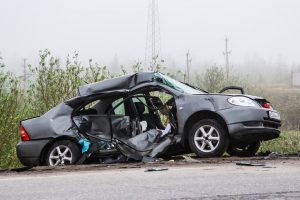
The Kentucky Motor Vehicle Reparations Act (KMVRA) is the law that governs most car accident claims in Kentucky. Its purpose is to make sure injured people can get basic medical and wage benefits quickly, without having to prove fault right away, while also limiting when lawsuits are allowed. (Correct. Lost wages are limited to $200 a week, and the medical expense coverage is up to $10,000 per person unless someone bought optional PIP coverage.)
1. Kentucky Is a “No-Fault” State — But Only at First
Kentucky follows a no-fault system, meaning:
- After most car accidents, your own insurance pays certain benefits first, regardless of who caused the crash.
- These benefits are called Basic Reparation Benefits, or “PIP” (Personal Injury Protection).
Fault still matters—but only after certain legal thresholds are met. (Don’t really agree with this. Fault for the wreck matters immediately, as you always have several claims, e.g., property damage, from any car wreck. The threshold issue refers only to a requirement for making a personal injury claim against the at-fault driver.)
2. What Are Basic Reparation Benefits (PIP)?
Under the KMVRA, most Kentucky auto policies include at least $10,000 in PIP coverage. (Pretty much all policies carry the $10,000 in PIP. It can be rejected or avoided, but for the average consumer, it is on the policy or another policy, with the $10,000, in PIP coverage, which can apply.)
PIP generally pays for:
- Medical bills
- Lost wages
- Certain replacement services (like help you must hire because you’re injured) (For lost wages and replacement lost services, you need a doctor’s note taking you off work or telling you not to perform a certain activity.)
Key points:
- PIP is paid by your own insurance company (Actually, it is paid by the vehicle you are occupying or the vehicle you are struck by if you are a pedestrian. Yes, if the vehicle you are in did not have car insurance, you can have your own automobile insurance company pay your PIP coverage.)
- It applies even if you caused the accident (Correct. That’s the no-fault part of the State. It does not matter how the wreck occurred. You and your passengers are entitled to no-fault coverage/PIP coverage, the same thing, no matter how the car wreck happened, as long as the wreck happened in Kentucky. If your car is registered in Kentucky and you have a car wreck with that car in another state, the PIP coverage follows you, and you could still claim no-fault benefits, even though the state where the car wreck occurred is not a no-fault state.)
- It is meant to provide fast, limited compensation, not full damages
3. You Usually Cannot Sue Right Away for Pain and Suffering (Not really true. You have a claim for pain and suffering as soon as the car wreck happens. However, the claim requires that you have at least $1,000 in medical bills, see below.)
Under the KMVRA, an injured person cannot sue the at-fault driver for pain and suffering unless one of the following happens:
-Medical expenses exceed $1,000, or
-The injury results in:
- Permanent disfigurement
- Permanent injury
- Fracture of a bone
- Loss of a body function
- Death
If none of these apply, the law generally bars a lawsuit for pain and suffering, even if the other driver was clearly at fault. (True, but if you were injured in the car wreck and just went to the Emergency Room, chances are you satisfied this threshold with at least $1,000 in medical bills.)
4. You Can Still Recover Property Damage
The KMVRA does not prevent claims for vehicle damage.
-Property damage claims are handled under traditional fault rules
-The at-fault driver (or their insurer) is responsible for:
- Vehicle repairs
- Total loss value
- Rental cars, when appropriate
5. You Can Reject the No-Fault System — But Most People Don’t
Kentucky law allows drivers to formally reject no-fault coverage. (Correct. Simple answer: don’t reject your no-fault benefits. It is another source to get your medical bills paid from a car wreck, AND it would shorten the Statute of Limitations for your personal injury claim from two years from the date of the wreck to one year from the date of the wreck.)
If a driver properly rejects no-fault:
- They give up PIP benefits
- They retain the right to sue immediately for pain and suffering (Essentially, you always have the right to sue the at-fault driver. The rejection just lets you include the first $10,000 of your medical bills or lost wages in your claim against the at-fault driver. Typically, this rejection only makes sense for motorcycle riders.)
However:
- Most drivers do not reject no-fault
- Rejection must follow specific statutory requirements (If the rejection is after the wreck occurs or is not filed with the Kentucky Department of Insurance, it is not valid.)
- Many people don’t realize what choice they made until after a wreck
6. Fault Still Matters After PIP Is Exhausted (Wrong! Fault always matters immediately and not just after PIP is exhausted.)
Once PIP benefits are used up, or the legal threshold is met: (Wrong! AI is confusing two concepts here. The legal threshold just means you need $1,000 in medical bills to claim against the at-fault party. The fact that your PIP is exhausted means that any medical bills over the $10,000 paid in PIP, the at-fault insurance carrier owes to you as part of your personal injury claim. Those excess medicals are part of YOUR personal injury claim and not the subrogation claim, held by the no-fault carrier, where your PIP carrier pursues the insurance company for the at-fault vehicle directly to recover the PIP benefits they paid out on your behalf.)
-The injured person may pursue a claim against the at-fault driver
-Kentucky applies comparative fault, meaning:
- Fault can be shared
- Recovery may be reduced based on the percentage of fault. (Mostly correct. Kentucky is a pure comparative fault state, which means that a jury divides fault among the drivers as they see fit, and you can still recover for the percentage you are not at fault. For example, if you were 99% at fault for a car wreck, you could still recover 1% of your damages.)
7. The Goal of the KMVRA (Really, the goal of Kentucky being a no-fault state is to be able to obtain medical treatment for your injuries without having to prove the other guy was at-fault for the car wreck.)
The KMVRA was designed to:
- Get basic benefits paid quickly
- Reduce small lawsuits
- Reserve the court system for more serious injuries